Inner Versus Outer Richmond For Your Next Home
June 18, 2026
June 18, 2026
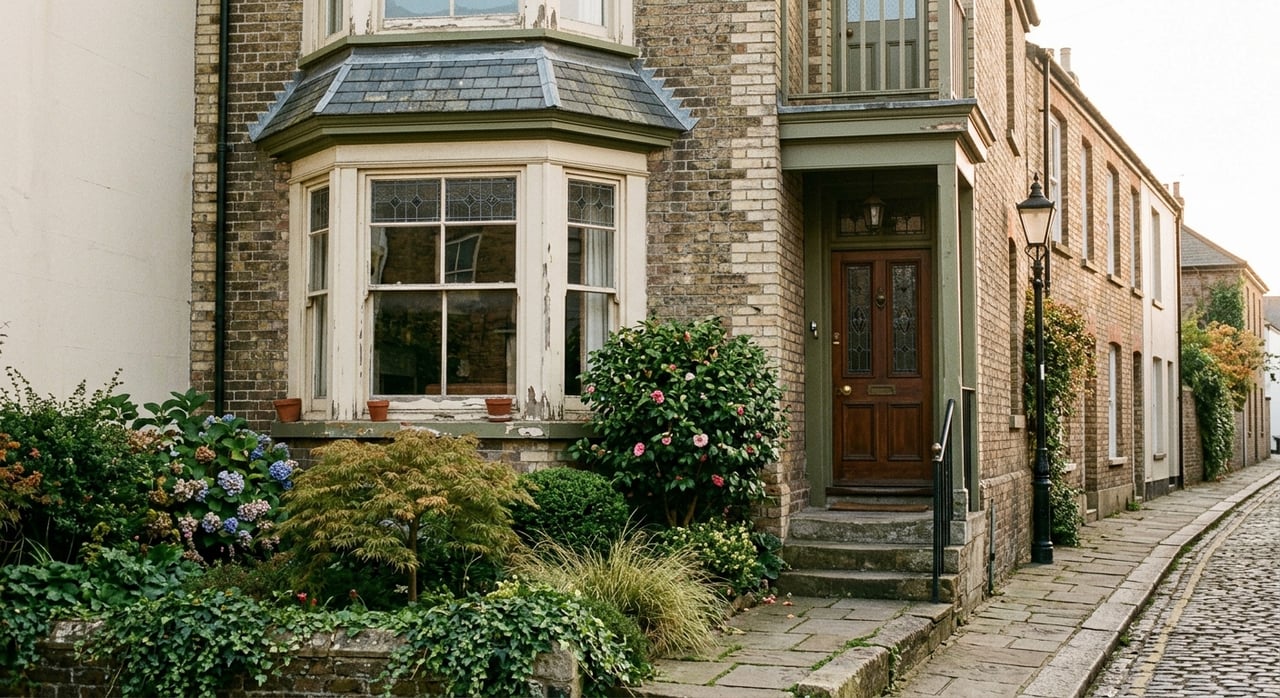
Trying to choose between Inner Richmond and Outer Richmond? You are not alone. Many San Francisco buyers like both areas for the same big-picture reason: the Richmond District feels residential, low-rise, and surrounded by remarkable open space, yet each side of the district lives a little differently day to day. This guide will help you compare housing, lifestyle, transit, and value so you can decide which part of the Richmond better fits the way you want to live. Let’s dive in.
The Richmond District has a distinct feel within San Francisco. According to SF Planning, almost all parcels allow four-story buildings, yet nearly 90% of buildings are two stories or less. With major parks and open space on three sides, the area often feels calmer and more residential than many buyers expect.
That overall character is true in both Inner and Outer Richmond. The difference is not whether one is urban and the other suburban. The difference is more about housing type, street activity, transit access, and how close you want to be to the coast and major parkland.
As of May 2026, both Inner Richmond and Outer Richmond are clustered around a median sale price of about $2.0 million. On the surface, that can make the two areas look interchangeable.
The more useful distinction is price per square foot. Inner Richmond is around $1.39K per square foot, while Outer Richmond is roughly $996 per square foot. In practical terms, many buyers are not choosing between two very different price tiers. They are choosing between different kinds of homes at similar headline prices.
Inner Richmond is the denser side of the district. SF Planning data shows that 47% of housing is in 2-to-4-unit buildings, with another 16% in 5-to-9-unit buildings and 13% in 10-to-19-unit buildings. Only 21% of the housing stock is single-family.
For you as a buyer, that usually means more flats, condos, TIC-style opportunities, and smaller multi-unit buildings. If you want flexibility in product type or you are open to a shared-building format, Inner Richmond typically offers more of that inventory profile.
Unit layouts also support that denser pattern. The area is centered on 2-bedroom units at 35%, with 3-to-4-bedroom units making up 29%. That mix can appeal if you want a manageable footprint, a classic flat layout, or an entry point into a sought-after San Francisco neighborhood without focusing only on detached homes.
Outer Richmond is much more single-family in character. SF Planning reports that 88% of housing is single-family, and just 7% is in 2-to-4-unit buildings. Owner occupancy is also notably higher at 79%.
That housing mix tends to align with buyers who want a house-scale experience. You are more likely to find larger layouts, more interior square footage, and a more traditional single-family feel.
The size profile reinforces that point. In Outer Richmond, 58% of units are in the 3-to-4-bedroom range, while 29% are 2-bedroom units. If your home search starts with space, layout flexibility, or a detached or semi-detached feel, Outer Richmond may fit more naturally.
One of the clearest lifestyle differences comes down to street life. SF Planning identifies Geary, Clement, and Balboa as the district’s main commercial corridors, but those corridors do not function the same way across the neighborhood.
Inner Clement stands out as the district’s most active commercial stretch. About half of its businesses are retail and neighborhood-serving shops, and roughly a quarter are restaurants. Inner Balboa is much smaller in scale, but it still contributes to a more walk-to-errands, walk-to-dining pattern in Inner Richmond.
Outer Clement and Outer Balboa also serve local residents, but at a smaller scale than Inner Clement. Geary remains a broader, more auto-oriented corridor. If your ideal weekend includes stepping out for dinner, coffee, or a few errands on foot, Inner Richmond usually offers more of that rhythm.
If you prefer a quieter residential backdrop with amenities concentrated along fewer corridors, Outer Richmond may feel more comfortable. It tends to trade some commercial energy for a calmer day-to-day atmosphere.
Both areas benefit from exceptional open space. District 1 contains about 20% of San Francisco’s total park space, and the Richmond is bordered by Golden Gate Park, Lands End, Lincoln Park, and Ocean Beach.
Golden Gate Park alone spans 1,017 acres and borders this side of the city. Ocean Beach stretches 3.5 miles along San Francisco’s western edge, while Lands End adds dramatic coastal trails in the city’s northwestern corner.
For many buyers, this is a major reason to focus on the Richmond at all. You are not just buying a home here. You are buying easier access to beaches, trails, parkland, and a landscape that feels unusually open for San Francisco.
That said, Outer Richmond generally places you closer to the coast and that western-edge atmosphere. If being near Ocean Beach, Lands End, and broad open skies matters a great deal to you, Outer Richmond often has the edge.
Transit is another meaningful dividing line. Commute patterns in SF Planning data show that Inner Richmond residents use transit more heavily than Outer Richmond residents, 41% versus 29%. Outer Richmond residents rely more on cars, at 59% versus 39% in Inner Richmond.
Current SFMTA neighborhood service pages also show broader transit coverage in Inner Richmond. Inner Richmond is served by routes including 1 California, 1AX, 1BX, 1X, 2 Sutter, 5 Fulton, 5R Fulton Rapid, 7X Noriega Express, 28, 28R, 29, 31, 31AX, 31BX, 33 Ashbury/18th Street, 38, 38R, 38BX, 43 Masonic, 44 O'Shaughnessy, and 91 Owl.
Outer Richmond still has solid service, but the list is narrower. Service includes 1 California, 5 Fulton, 5R Fulton Rapid, 18 46th Avenue, 28, 28R, 29 Sunset, 31, 31AX, 38, 38R, and 38AX.
A few service details are especially useful for buyers comparing daily convenience. SFMTA lists 38R Geary Rapid as running weekdays from 5 a.m. to 10 p.m. and weekends from 6 a.m. to 9 p.m. The 1 California runs daily from 5 a.m. to 12 a.m., and 5R Fulton Rapid runs weekdays from 7 a.m. to 7 p.m., with local stops west of 6th Avenue.
If you want the broadest menu of transit routes and a lifestyle less dependent on a car, Inner Richmond is usually the stronger fit. If you are comfortable with a somewhat more car-oriented routine in exchange for larger home options and coastal proximity, Outer Richmond may make more sense.
Inner Richmond tends to appeal to buyers who prioritize convenience and flexibility in housing type. It can be an especially strong match if you want to stay close to active commercial corridors and have more transit choices.
You may prefer Inner Richmond if you are looking for:
For some buyers and investors, Inner Richmond also offers a useful inventory profile because of its concentration of 2-to-4-unit and mid-size multi-unit buildings. If you are evaluating multi-family potential or owner-occupier investment opportunities, this side of the district often deserves a close look.
Outer Richmond tends to appeal to buyers who want more of a house-oriented environment. It often fits well when space, layout size, and a quieter residential setting matter more than being in the busiest commercial pocket.
You may prefer Outer Richmond if you are looking for:
For buyers focused on space rather than density, Outer Richmond often presents the clearest path. It can also be appealing if you want the Richmond’s park-framed identity while leaning more toward the western edge of the city.
If you compare only median prices, Inner and Outer Richmond can look surprisingly similar. Once you look closer, the real choice becomes clearer. Inner Richmond generally offers denser housing, more active commercial corridors, and stronger transit coverage, while Outer Richmond offers larger single-family-oriented housing, lower price per square foot, and closer proximity to the coast.
That is why the best move is not asking which one is better in the abstract. It is asking which one better supports your routine, your space needs, and the kind of home you want to own in San Francisco.
If you are weighing Richmond District options and want thoughtful guidance on housing type, block-by-block feel, or value potential, Level 5 Real Estate can help you narrow the search with clear, local insight.
Stay up to date on the latest real estate trends.
July 16, 2026
July 9, 2026
July 2, 2026
June 25, 2026
June 18, 2026
June 11, 2026
You’ve got questions and we can’t wait to answer them.