Lake District Duplex And Triplex Investment Primer
April 2, 2026
April 2, 2026
Thinking about buying a duplex or triplex near Lake Street? It can look like a straightforward small multifamily play, but this pocket of San Francisco comes with a very specific mix of charm, scarcity, and regulation. If you are weighing your first purchase or refining your next investment move, this guide will help you understand what you are really buying, how to underwrite it more carefully, and where the real upside often lives. Let’s dive in.
Lake Street is not a typical apartment submarket. According to RentCafe’s Lake Street neighborhood profile, average rent is $3,624, median household income is $148,952, and 61% of homes are renter occupied.
The housing stock also skews smaller and more intimate. RentCafe reports that 89% of apartments are in buildings with fewer than 50 units, while only 5% are in 50+ unit buildings. For you as an investor, that matters because duplexes and triplexes here compete more with other small buildings than with large, standardized apartment communities.
The location story is also strong. Lake Street carries a Walk Score of 85, Transit Score of 65, and Bike Score of 94, based on the same RentCafe neighborhood data. That does not guarantee a rent premium, but it does support steady renter interest from people who value access and neighborhood character.
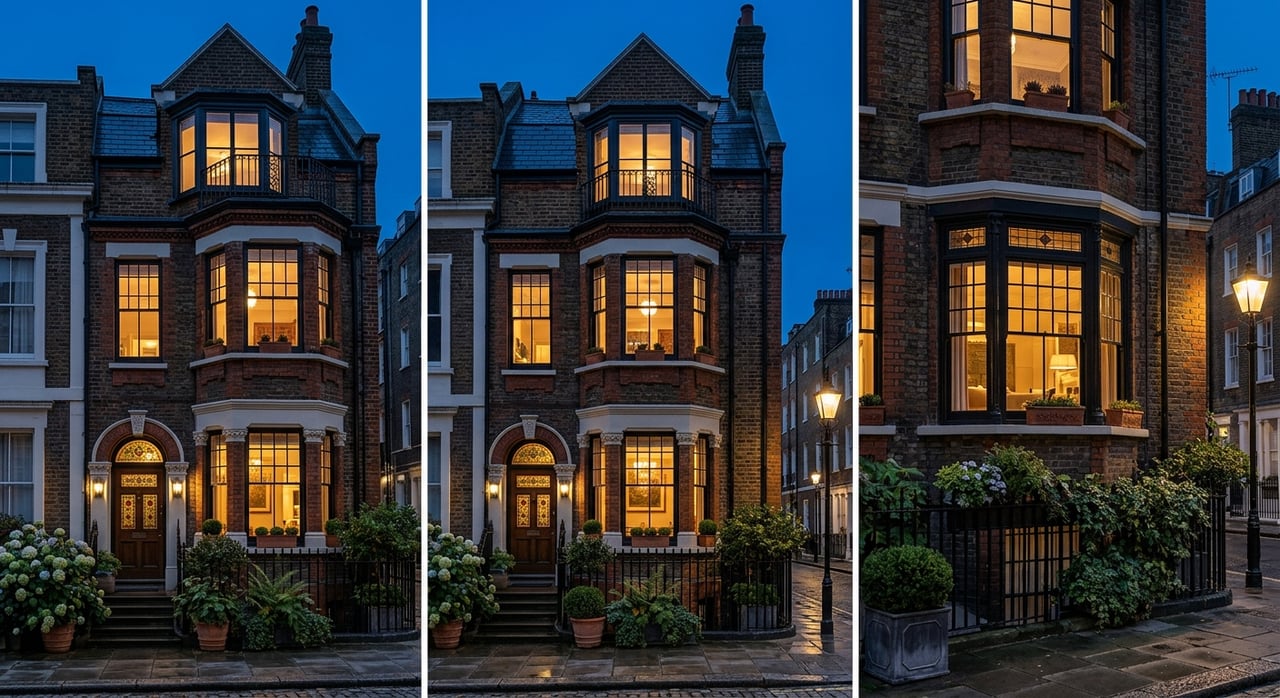
In this area, most duplex and triplex inventory is older housing stock, not recently built product. San Francisco Planning describes much of the city’s west-side residence park and garden suburb development as taking shape between 1910 and 1940, after the 1906 earthquake.
That historical pattern lines up with what current Lake Street listings show. The research report cites examples like a 1907 Edwardian duplex and a 1911 Edwardian three-unit property, which points to a market full of older wood-frame buildings with period details, legacy layouts, and renovation potential.
This is one of the most important mindset shifts for buyers. In Lake District, you are often buying location, character, and optionality inside an older building envelope, rather than a clean, newer asset with predictable systems and uniform finishes.
One of the easiest underwriting mistakes in a duplex or triplex is using a single blended rent assumption across the entire property. In this submarket, it is smarter to model each unit on its own based on bedroom count, condition, and finish level.
For broader context, RentCafe’s San Francisco rent data shows citywide average rent at $3,580, with average one-bedrooms at $3,411, two-bedrooms at $4,603, and three-bedrooms at $5,732. The Lake Street benchmark is slightly higher at $3,624, but that number should be treated as a starting point, not a shortcut.
A renovated upper flat with strong natural light may perform differently from a more dated garden-level unit. A vacant unit may lease differently than a tenant-occupied unit with below-market rent. If you are looking at a duplex or triplex here, unit-by-unit underwriting is the more realistic approach.
Even in a desirable pocket, you should not underwrite as if every unit will lease instantly at top-of-market rent. The city’s broader rental market has seen more churn, and that can affect your timing and cash flow.
According to Zillow’s October 2025 rent report, San Francisco saw higher annual rent growth late in 2025, but also more vacancies, new supply, and a greater share of listings offering concessions. For you, the takeaway is simple: build in reasonable assumptions for vacancy, concessions, and lease-up time.
That kind of discipline matters even more in a regulated market. It helps you avoid overpaying based on an overly optimistic first-year pro forma.
In San Francisco, small multifamily investing is never just about purchase price and rent. Local rules can directly affect income growth, operating strategy, and exit planning.
For rent-controlled units, San Francisco announced that the allowable annual rent increase is 1.4% from March 1, 2025 through February 28, 2026. Landlords must also obtain a rent increase license before imposing annual allowable or banked increases.
If a unit is not covered by the city’s local rent ordinance, California’s tenant protection rules may still apply. San Francisco’s AB 1482 guidance notes that annual increases are capped at 5% plus local CPI, or 10%, whichever is lower, and that the San Francisco maximum for covered units is 6.3% from August 1, 2025 through July 31, 2026.
The practical point is that rent growth may be limited while expenses continue rising. That dynamic should be part of your initial underwriting, not a surprise after closing.
Some buyers assume a duplex or triplex gives them a simple path to owner occupancy and future unit control. In San Francisco, that assumption needs a careful reality check.
San Francisco’s eviction rules apply broadly to residential properties, including many buildings constructed after 1979. Owner or relative move-in evictions are tightly controlled, and the city outlines ownership thresholds, occupancy requirements, and limits on how many units in a building may be used for that purpose.
For most investors, owner occupancy should be viewed as a genuine lifestyle strategy, not a workaround to sidestep tenant protections. If you are buying with the goal of living in one unit, it is worth evaluating that plan with precision before you write your offer.
It can be tempting to imagine a duplex or triplex with one unit producing flexible short-term rental income. In San Francisco, that is generally not a strong base-case strategy.
The city’s short-term rental guide states that un-hosted rentals are generally limited to 90 nights per calendar year. It also notes that in a multi-unit building, you may only register the unit in which you reside.
That means short-term rental income usually should not be the engine of your investment thesis. If you include it at all, treat it as a narrow and highly regulated possibility, not a core assumption.
Small buildings can feel simpler than larger apartment assets, but they still come with local fees that should appear in your numbers from day one. In San Francisco, those line items are not optional.
The city’s Rent Board Fee page lists the annual Rent Board Fee at $59 per dwelling unit for tax year 2025-2026. The research report also notes that apartment buildings with three or more rental units may be subject to the city’s annual healthy housing fee.
For a triplex, both fees may matter. For a duplex, the healthy housing fee generally does not apply unless there are at least three rented units. These are not huge numbers on their own, but they are part of the broader lesson: small multifamily underwriting in San Francisco rewards attention to detail.
In Lake District, the best value-add opportunities are often practical, not flashy. Because much of the inventory is older wood-frame Edwardian or prewar stock, the most realistic improvements are usually non-structural updates.
Based on the historic housing profile and current property examples in the research, common upside areas can include:
These improvements can make a property more functional and more attractive to future tenants or owner-occupants. They may also help you protect value without taking on the kind of risk that comes with overly aggressive reconfiguration.
For some buyers, an accessory dwelling unit can be part of the long-term value story. That said, you should approach this as optionality, not certainty.
San Francisco’s ADU permit guide states that many single-family and multi-family properties may be able to add an ADU, depending on lot, structure, and code conditions. The same guide says adding a unit typically costs at least $125,000 in labor and materials, with architect, engineering, and city fees adding materially to the total budget.
That means an ADU can be meaningful, but only when the site, permit path, and economics all line up. If you are evaluating a property partly for ADU potential, it is smart to underwrite the deal so it still works without that future unit.
Because these buildings are often older wood-frame properties, reserve planning should include a sober look at structural and seismic issues. Even if a duplex or triplex is outside the city’s main mandatory soft-story retrofit category, that does not mean structural costs are irrelevant.
San Francisco’s soft-story retrofit program applies to certain wood-frame buildings with five or more residential units built before January 1, 1978. The research report makes an important practical point: even when a duplex or triplex falls outside that main mandatory program, buyers should still verify whether site-specific structural work, retrofit triggers, or permit conditions could apply.
For you, that supports a conservative capital reserve strategy. It is easier to own these assets comfortably when you budget for building realities upfront.
If you are comparing Lake District duplexes and triplexes, keep your model clear and disciplined. A practical framework looks like this:
This process is not glamorous, but it is where good decisions come from. In a market like this, careful underwriting is often the edge.
The strongest investment strategies here are usually the ones that respect both the neighborhood and the rules. Based on the research report, Lake Street duplexes and triplexes are best understood as scarce, older, owner-friendly assets with meaningful regulatory constraints.
That tends to make these strategies the most durable:
If you are looking for a frictionless apartment investment, this may not be your ideal submarket. But if you want a character-rich San Francisco asset with long-term appeal, duplexes and triplexes here can be compelling when purchased with discipline.
The right opportunity often comes down to nuanced details such as unit mix, occupancy status, condition, permit history, and realistic renovation scope. If you want experienced guidance on evaluating a small multifamily opportunity in San Francisco, Level 5 Real Estate offers boutique, senior-led advice grounded in local market knowledge, renovation fluency, and investor-focused service.
Stay up to date on the latest real estate trends.
July 16, 2026
July 9, 2026
July 2, 2026
June 25, 2026
June 18, 2026
June 11, 2026
You’ve got questions and we can’t wait to answer them.