Ever wonder why two similar Russian Hill homes can differ in price just because one frames the Golden Gate and the other looks onto trees? In this neighborhood, views are part of the lifestyle story and a major driver of value. You want to understand what buyers pay for, how appraisers think about it, and how to weigh the trade-offs for your goals. This guide breaks down view types, orientation, and elevation so you can price, shop, or negotiate with confidence. Let’s dive in.
Why views command premiums in Russian Hill
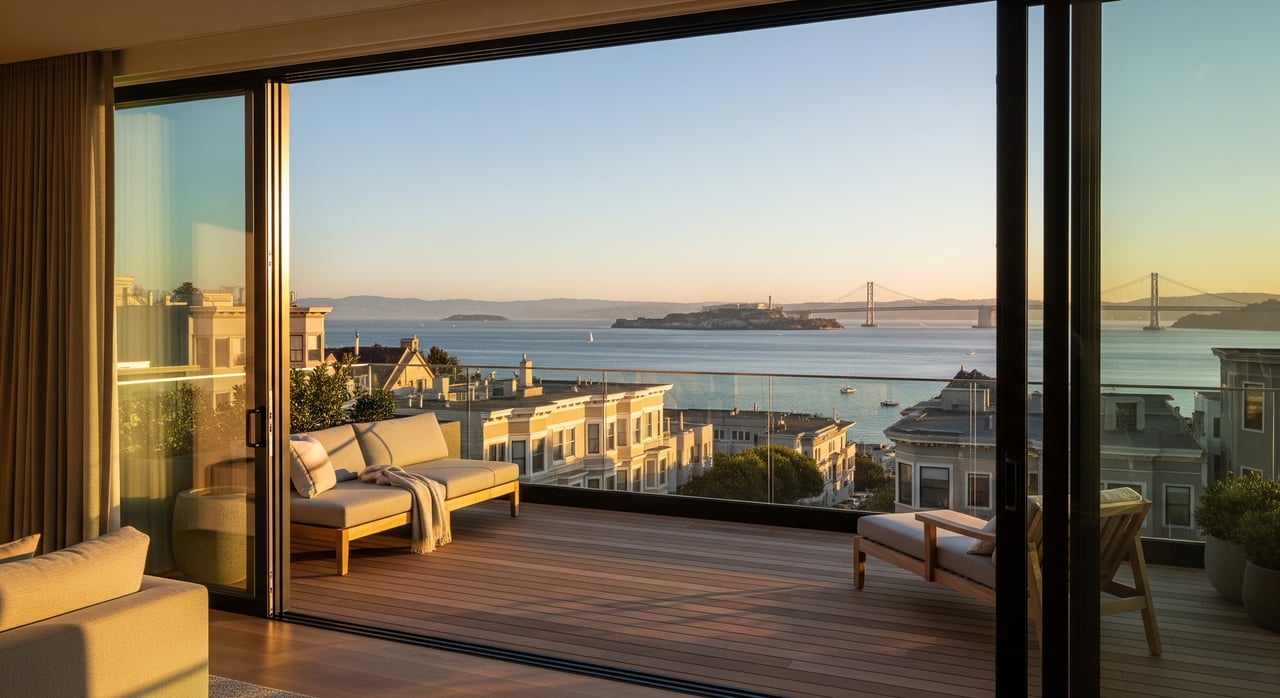
Russian Hill sits high on San Francisco’s north side, close to some of the city’s most iconic sights. From the right elevation and angle, you can see open bay water, Alcatraz, the Golden Gate Bridge, the Bay Bridge, and the downtown skyline. Small changes in height or orientation can shift a view from ordinary to exceptional.
Views are scarce and can be vulnerable to new construction in a dense urban setting. Buyers often pay for the daily enjoyment and prestige of a view, even if it does not pencil as a pure investment. That mix of lifestyle value, rarity, and perceived permanence creates real price separation in Russian Hill.
View types and what buyers pay for
Different outlooks carry different weight with buyers. Here is how the market generally stacks them.
Water and bay views
Open bay water, with sightlines to Alcatraz or Angel Island, ranks at the top. The openness and relative permanence make these views highly prized. When the water is the focal point, buyers tend to ascribe strong value.
Bridge views
The Golden Gate Bridge is an iconic, marketable feature and often commands a premium. Bay Bridge views can be just as compelling, particularly at night. The recognizability and photogenic quality help listings stand out.
City skyline and city lights
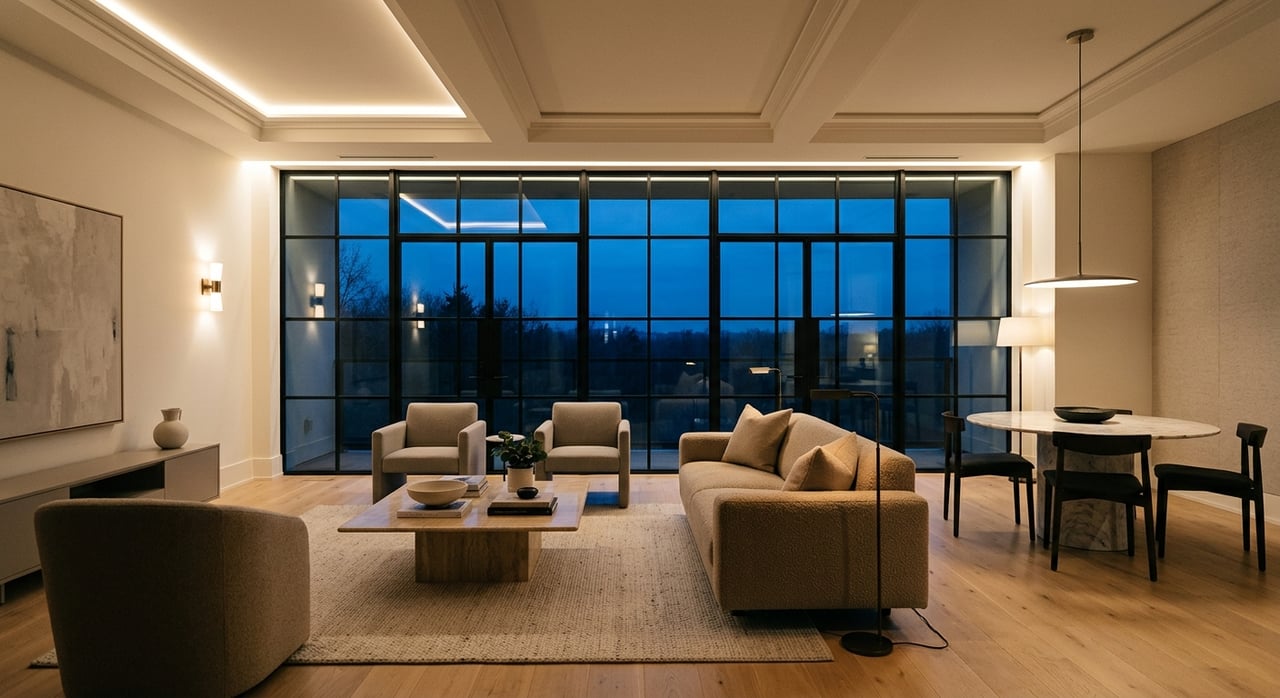
Skyline and city lights views offer evening drama and a sense of place. Condominiums and upper-floor units often emphasize these angles for ambiance and prestige.
Partial or framed views
A peek at a bridge between buildings, or a slice of water through trees, can add value, but results vary. The premium depends on how much you see and for how long each day.
Neighborhood, garden, or street outlooks
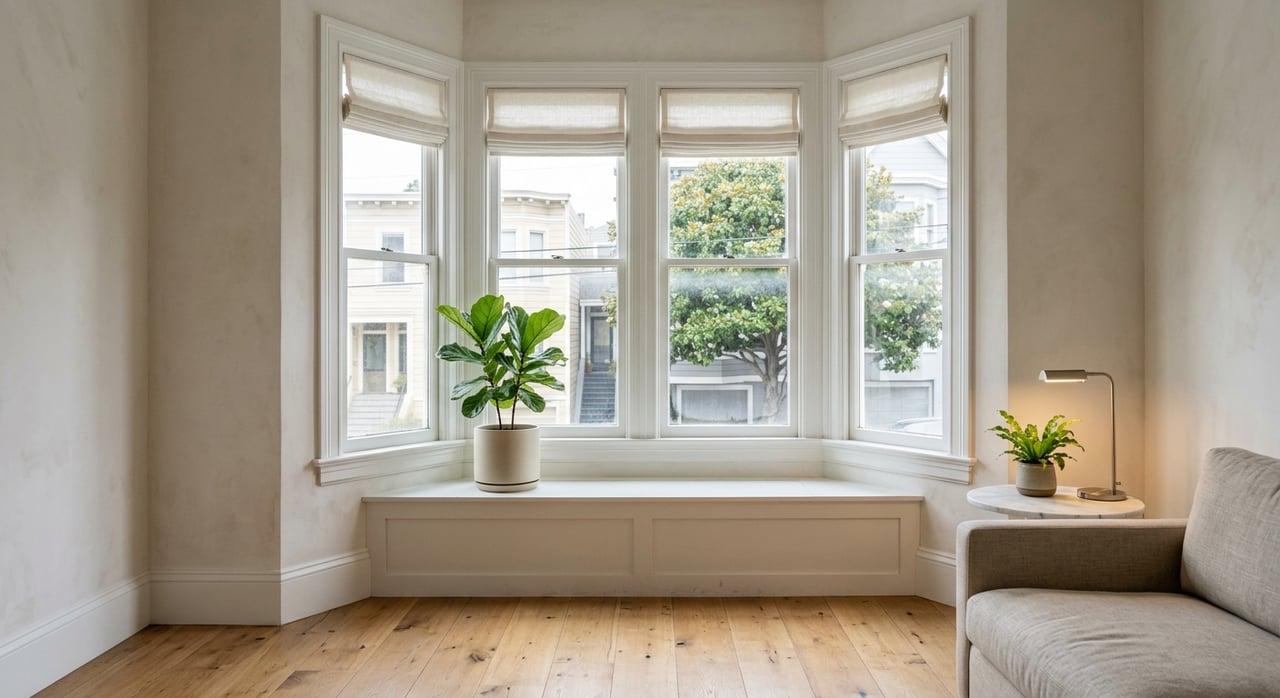
These are at the base of the view scale, yet still desirable when private and quiet. Well-landscaped or park-adjacent outlooks can help a property feel serene.
Qualities that magnify value
Not all views of the same type are equal. These traits move the needle.
- Scope and openness: Panoramic, unobstructed views carry more value than narrow or partial outlooks.
- Permanence: Views unlikely to be blocked, such as open water or parkland, are more valuable than those facing infill risk.
- Orientation and light: West and northwest exposures catch late-day light and sunsets toward the Golden Gate. East-facing windows welcome softer morning light over the bay. Your tolerance for solar gain and glare matters too.
- Elevation and vertical position: On a hill and in multi-story buildings, higher positions usually mean farther-reaching vistas and fewer street obstructions.
- Privacy and noise: A beautiful view that also feels private is more valuable than one overlooking busy corridors or with direct sightlines into neighbors.
- Seasonality and weather: Fog and the marine layer can hide landmarks at certain times. Actual visibility hours affect real-world enjoyment and thus perceived value.
Orientation, fog, and time of day
Your experience of a view changes with the sun and the weather. West and northwest exposures can deliver dramatic sunsets toward the Golden Gate, which many buyers love. East-facing windows brighten mornings over the bay and are gentler in the afternoon.
Russian Hill’s proximity to the water means fog can roll in quickly. A view that dazzles at midday may soften under evening fog, or vice versa. To judge value, you should see a property across different times and conditions. The more consistently visible the focal feature, the stronger the premium tends to be.
How appraisers measure view premiums
Appraisers use established methods to isolate the value of a view.
- Paired-sales approach: Compare two similar properties where the key difference is the view. The adjusted price gap approximates the view premium. This is the go-to method in practice.
- Hedonic regression: Statistical models estimate the contribution of attributes like view type, floor level, and size across many sales. These studies guide market-level understanding but depend on model choices.
- Practice notes: For condos, floor and orientation drive comparisons. For single-family homes, lot elevation, setbacks, and rooflines matter. Appraisers also discount views that are easy to block and give more credit to those with perceived permanence.
There is no universal percentage that a view adds. Premiums vary with scarcity, market conditions, measurement definitions, and the buyer mix active in a given price tier.
Price trade-offs you will face
You will likely choose between compelling but different outlooks.
- A narrow but iconic Golden Gate angle versus a wide open-water panorama. Some buyers prioritize the landmark, others prefer breadth and openness.
- A high-floor condo with abundant light and long views versus a lower unit with a private terrace and partial outlook. Privacy and outdoor living can offset pure view depth for certain buyers.
These choices are personal. The right answer depends on your daily use, your tolerance for glare or fog, and how you balance lifestyle against resale.
Seller playbook: Prove and present the view
If you are selling in Russian Hill, treat the view like a marquee feature and substantiate it.
- Inventory every vantage point: Photograph the view from each principal room and any outdoor spaces at sunrise, midday, sunset, and on a foggy day.
- Build tight comps: Prioritize recent Russian Hill sales with the same view type and similar elevation. For condos, target the same building or stack when possible.
- Disclose risks: Share any known nearby permits, proposed additions, or private view easements. Transparency builds trust and supports appraisal outcomes.
- Market with precision: Emphasize key qualities factually. Use language that reflects scope and permanence without promising future protection. Floor plans with sightlines help buyers visualize.
- Set and defend the price: If your list price reflects a view premium, be ready with paired-sales examples and a concise narrative that appraisers can follow.
Buyer due diligence: Protect your view value
If you are buying for the view, verify what you will actually enjoy and for how long.
- Visit at different times: See the view in morning, afternoon, and evening, on clear and foggy days. Confirm how often the focal feature is visible.
- Check permit activity: Review San Francisco Planning and Department of Building Inspection records for nearby projects that could affect the sightline.
- Ask for disclosures: Request any known easements, neighbor agreements, or pending applications that relate to the view.
- Quantify the premium: Compare price per square foot between near-identical units that differ mainly by view. Decide if the premium fits your priorities or resale plan.
- Confirm HOA and access: For condos, review rules around rooftop decks, common areas, and elevator service that affect how you use the view.
Gather a small file: photos by room and time of day, a short list of recent comps with view descriptions, permit search results within a 200 to 300 foot radius, and any appraiser notes on view adjustments.
Negotiation tips for Russian Hill
Negotiation often turns on permanence and scarcity.
- If a view faces potential blockage, use that risk in price discussions and contingency planning.
- If a property offers a rare, permanent-feeling view such as open water or a clear bridge angle, expect a stronger seller stance. Ask for strong comps, or decide if the lifestyle benefit is worth the premium to you.
Putting it all together
In Russian Hill, view premiums rest on type, scope, permanence, orientation, elevation, and privacy. Water and bridge views usually lead, skyline views follow, and partial or framed views can still add meaningful value. Appraisers rely on paired sales and a careful read of how likely a view is to endure. As a buyer or seller, your best move is to document, compare, and stress-test assumptions in real conditions.
If you want a second set of eyes on view quality, permanence risk, and block-level comps, our team is here to help. Reach out to Level 5 Real Estate to contact Mary for a complimentary market consultation.
FAQs
Is there a fixed percentage a Russian Hill view adds to price?
- No. Premiums are context specific and are typically derived from comparable sales or broader statistical models, which vary with scarcity, market timing, and view permanence.
Which view type is most valuable in Russian Hill?
- Open-water bay vistas and iconic bridge views tend to lead due to rarity and marketability, with city-skyline views also in demand for evening ambiance.
Can a view in San Francisco be legally protected?
- Generally, there is no automatic right to a view. Protection usually requires a private easement or specific restrictions, so buyers should verify any agreements.
How can I judge how permanent a view is before buying?
- Review zoning height limits and check recent or pending permit applications near the sightline, and note whether the outlook faces open water or protected public land.
Should I pay a premium for a view if I plan to resell in a few years?
- It depends on demand in your segment. Lifestyle-driven buyers often support premiums, but softer markets can compress them, so rely on tight comps when you evaluate.
Do higher floors in Russian Hill always command more value?
- Higher elevation typically improves views and reduces street clutter, but orientation, privacy, and building-specific factors can outweigh raw floor height.